
WWDC 2026: This Year Apple's software Upgrade — Our Thoughts
- Dimitris Schoen
- Jun 9
- 3 min read
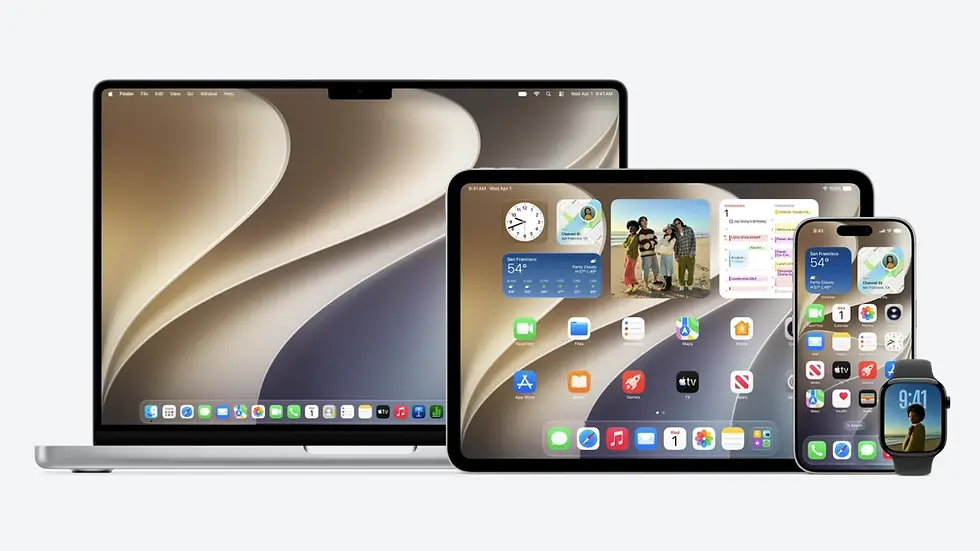
From AI-powered experiences to deeper device integration, Apple is betting that its greatest strength remains the seamless connection between hardware and software.
Following Apple's annual Worldwide Developers Conference (WWDC), one message emerged more clearly than any product announcement: Apple is entering a new phase of ecosystem-driven innovation.
While CEO Tim Cook opened the keynote in familiar fashion, the focus quickly shifted away from individual devices and toward something larger—the increasingly intelligent relationship between them. At the centre of this vision is Siri AI, which Apple is positioning not simply as a voice assistant but as the connective layer that ties the entire Apple experience together or as a single device.
For years, competitors such as Google and Samsung have promoted connected ecosystems and cross-device experiences. Apple's latest announcements suggest the company is now accelerating its own strategy, leveraging its unique advantage of controlling both hardware and software. The result is a vision where interactions become more fluid, contextual, and increasingly powered by artificial intelligence.
Progress Over Spectacle
Unlike some previous WWDC events that focused heavily on visual redesigns or breakthrough hardware, this year's keynote emphasised refinement and practical improvements.
Apple's strategy appears less concerned with dramatic reinvention and more focused on making its products work better, and if possible, together. The company is investing in optimisations that strengthen the user experience across iPhone, iPad, Mac, Apple Watch, and other devices, creating a more unified ecosystem for both existing and new customers.
This approach may prove to be one of Apple's strongest competitive advantages. As consumers become increasingly embedded in digital ecosystems, seamless interoperability can often be more valuable than individual feature innovations.
For Basket, these developments are particularly noteworthy. Improvements to cross-device functionality and AI-powered experiences could create new opportunities for deeper integration within the Apple ecosystem. As these technologies mature, they may enable more intuitive user journeys and support future product enhancements that align with Apple's evolving platform capabilities.
Siri Takes a Significant Step Forward
Among the announcements, Siri's evolution stood out as one of the most consequential developments.
Historically, Apple's voice assistant has struggled to keep pace with advances made by competitors in artificial intelligence. This year's updates suggest Apple is making meaningful progress toward closing that gap.
Particularly compelling are new visual intelligence capabilities integrated across the Apple ecosystem. Features that leverage camera-based recognition and contextual understanding have the potential to transform everyday interactions, from identifying objects and locations to supporting health-related insights and productivity workflows.
The practical applications are substantial. Rather than acting solely as a reactive assistant, Siri is becoming increasingly capable of understanding and responding to the user's environment.
However, adoption will likely depend on device compatibility and software requirements. Many of these features are expected to require the latest versions of the operating system and may be subject to Apple's privacy framework and user permissions. As with previous Apple innovations, the full experience will be most powerful within the company's own ecosystem.
Even so, the direction is clear: Apple is positioning AI as an integrated, everyday utility rather than a standalone feature.
Technology and Digital Well-Being
Beyond artificial intelligence, Apple also devoted attention to a growing concern across the technology industry: digital well-being.
New protections for children, families, and online safety are being incorporated into Apple's upcoming operating systems. These enhancements reflect a broader industry trend as governments and regulators increase pressure on technology companies to provide stronger safeguards for users.
The conversation has become increasingly prominent worldwide. In the United Kingdom, for example, Prime Minister Sir Keir Starmer's government has pushed for greater accountability from technology platforms regarding online safety and youth protection.
Apple's response demonstrates that user well-being is becoming a strategic priority alongside innovation and performance. As regulatory scrutiny intensifies globally, such initiatives may become as important to platform success as technical advancements themselves.
Looking Ahead
WWDC 2026 was not defined by a single revolutionary product announcement. Instead, it showcased Apple's commitment to strengthening the foundations of its ecosystem through artificial intelligence, deeper device integration, and user-focused improvements.
The software updates expected to roll out later this year will provide a clearer picture of how these features perform in real-world scenarios. What is already evident, however, is Apple's intention to make its ecosystem smarter, more connected, and more useful in everyday life.
For companies building within the Apple ecosystem, including Basket, the months ahead will be worth watching closely. The evolution of Siri, advances in visual intelligence, and improved cross-device experiences could influence product development strategies and create new opportunities for innovation.
Apple's message this year was subtle but significant: the future is not about individual devices. It's about how intelligently they work together.


